
Anup Saha, currently a Wholetime Director at Kotak Mahindra Bank, has been appointed as the new Managing Director and Chief Executive Officer for a three-year term, effective January 1, 2027, with the Reserve Bank of India's approval.

India's leading private-sector banks, including HDFC Bank, Axis Bank, and Kotak Mahindra Bank, reported robust deposit growth in the July-September quarter (Q2FY27), significantly aided by the Reserve Bank of India's concessional FCNR(B) swap window.

Over a dozen mutual fund houses in India have temporarily suspended fresh subscriptions in their gold fund of funds (FoFs) and gold-silver FoFs, a move believed to be influenced by directions from the Securities and Exchange Board of India (Sebi) ahead of the festive season.

Indian banks are projected to achieve healthy profit growth in the second quarter of financial year 2027 (Q2FY27), driven by lower credit costs, robust advance growth, and fee income. However, net interest margins (NIMs) are expected to face pressure due to significant mobilisation of foreign currency non-resident (bank) FCNR(B) deposits.

Indian benchmark indices, Sensex and Nifty, recovered early losses on Wednesday, driven by strong buying in IT stocks and HDFC Bank, sustaining the previous session's recovery despite FII outflows. Track Sensex, Nifty on October 14.

Indian benchmark indices Sensex and Nifty saw an early rebound, driven by strong performances from blue-chip HDFC Bank and major IT firms like HCL Tech, which reported a significant rise in net profit. Track Sensex, Nifty on October 13.

Indian benchmark stock indices, Sensex and Nifty, experienced a significant drop on Monday, with the Sensex falling by nearly 548 points, primarily due to a fresh spike in crude oil prices, persistent foreign fund outflows, and rising bond yields.

Jio Platforms Ltd's initial public offering (IPO), anticipated to be India's largest, is scheduled to open for subscription on October 21 and close on October 23, with reservations for employees and Reliance Industries Ltd shareholders.

Indian benchmark indices, Sensex and Nifty, extended their rally in early trade, driven by strong buying in bank stocks, Reliance Industries, and positive global cues, despite foreign institutional investors offloading equities.

Anup Bagchi, the incoming MD & CEO of HDFC Bank, is set to become India's highest-paid bank CEO with a proposed target annual compensation package of approximately 35.9 crore, including a significant variable pay component and a one-time joining bonus.

Jio Platforms, the digital arm of Reliance Industries Ltd (RIL), is launching its initial public offering (IPO) with a price band of 1,065-1,119 a share, aiming to make RIL a net-debt-free company and create long-term shareholder value.

The Reserve Bank of India's recent measures, including a dedicated dollar window for state-run oil marketing companies and tightened foreign exchange derivative rules, are expected to provide near-term relief to the rupee's depreciation, but market participants believe global factors and balance of payment dynamics will continue to exert pressure in the medium term.
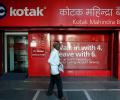
The Enforcement Directorate (ED) has arrested a former Kotak Mahindra Bank executive, Pushpinder Singh, alleged to be the mastermind of a Rs 145-crore fraud involving Panchkula municipal corporation officials, bank employees, and private individuals.
Indian equity benchmark indices Sensex and Nifty experienced a significant tumble in early trade, primarily driven by elevated crude oil prices due to ongoing West Asia uncertainty and substantial foreign fund outflows. Track Sensex, Nifty on September 29.
Indian benchmark indices Sensex and Nifty experienced a significant downturn in early trade, with the Sensex tanking 730 points, driven by surging crude oil prices, escalating geopolitical uncertainties, and a weak trend observed across Asian markets.

Global payments solution major Mastercard has fully exited Indian fintech firm Pine Labs, selling its entire 4.31 per cent stake for Rs 933 crore through block deals on the BSE.
Indian benchmark indices, Sensex and Nifty, experienced a decline in early trade due to relentless foreign institutional investor (FII) outflows, although a drop in crude oil prices below USD 100 per barrel provided some cushioning. Track Sensex, Nifty on October 1.
Indian benchmark stock indices, Sensex and Nifty, rebounded on Friday, driven by value buying in banking, oil & gas, and auto shares following recent sharp losses. The Sensex climbed 315.20 points to settle at 73,895.74, while the Nifty rose 77.40 points to 23,140.50.

Indian benchmark indices, Sensex and Nifty, experienced a significant drop in early trade, with the Sensex falling over 600 points, primarily due to crude oil prices surging past the USD 100 per barrel mark and weak global market trends. Track Sensex, Nifty on September 24.
Indian benchmark equity indices, Sensex and Nifty, experienced declines in early trade due to renewed tensions in West Asia, which led to a rebound in crude oil prices, coupled with weak global market trends and foreign fund outflows.

'There is mis-alignment in strategic thinking of the board and management.' 'As the business environment and customer behaviour evolve rapidly, boards are increasingly looking for leaders who can bring new ideas and challenge legacy approaches.'

Selected students will receive Rs 1.5 lakh per year to cover academic expenses such as tuition fees, hostel charges, books, stationery, laptops, internet and transportation.

Indian equity benchmark indices Sensex and Nifty rebounded sharply in early trade, with the Sensex jumping over 530 points, tracking a broad-based rally in Asian markets after four consecutive days of decline.
Indian benchmark indices, Sensex and Nifty, experienced declines in early trading, primarily due to selling pressure on blue-chip HDFC Bank and ongoing geopolitical uncertainties.

Shares of major private lenders, including HDFC Bank, Axis Bank, and Kotak Mahindra Bank, experienced a sharp selloff after their June-quarter results indicated persistent pressure on net interest margins (NIMs), despite healthy credit growth. This decline overshadowed gains in ICICI Bank and Punjab National Bank (PNB), which reported resilient or stronger-than-expected earnings.
Indian benchmark indices, Sensex and Nifty, closed lower on Wednesday, reversing early gains due to profit-taking and weakness in sectors like IT, FMCG, and consumer durables, despite support from lower crude oil prices.

Indian benchmark indices Sensex and Nifty opened higher, driven by a significant drop in crude oil prices and a positive trend in global equities, with foreign fund inflows further bolstering domestic markets.

Indian stock markets this week will be primarily influenced by a series of corporate Q1 earnings, the evolving geopolitical situation in West Asia, and fluctuations in crude oil prices, according to market analysts.

Indian benchmark equity indices, Sensex and Nifty, traded marginally higher in early deals despite cautious global cues stemming from elevated crude oil prices due to geopolitical uncertainties and a sharp fall in US markets. Track Sensex, Nifty on August 21, 2026.
Indian benchmark equity indices, Sensex and Nifty, closed lower for multiple consecutive days, with the Nifty extending its losses to a seventh day, primarily due to elevated crude oil prices following the expiry of the US-Iran ceasefire without a diplomatic resolution.
Indian benchmark equity indices, Sensex and Nifty, experienced declines in early trade due to elevated crude oil prices and persistent geopolitical uncertainties, particularly following the expiry of the US-Iran ceasefire. Track Sensex, Nifty on August 19, 2026.
Indian benchmark indices Sensex and Nifty saw declines in early trade, primarily due to elevated crude oil prices stemming from the unresolved geopolitical situation in the Strait of Hormuz. Analysts suggest that while global sentiment improved slightly after a benign US inflation report, the ongoing US-Iran standoff continues to exert pressure on domestic equities. Track Sensex, Nifty on August 13.
Indian benchmark indices, Sensex and Nifty, closed flat on Friday, with elevated crude oil prices due to geopolitical uncertainties and a rebound in US Treasury yields making investors cautious and preventing a decisive market rally.

Indian banks anticipate a reduction of up to 50 basis points in their funding costs due to a surge in liquidity from robust Foreign Currency Non-Resident (Bank), or FCNR (B), flows, lessening their reliance on more expensive certificates of deposit (CDs).

Indian benchmark stock indices, Sensex and Nifty, experienced mixed trading following the introduction of a new Closing Auction Session (CAS) for shares with futures and options (F&O) contracts, aimed at enhancing price discovery transparency. Track Sensex, Nifty on August 4
Kotak Mahindra Bank's net interest margin is likely to swell after the Reserve Bank of India (RBI) lifted its restrictions on the private lender that barred it from issuing fresh credit cards and onboarding new customers through digital mode, brokerages said on Thursday. The bank's net interest margin (NIM) has seen a decline of over 35 basis points (bps) since the restrictions were imposed by the regulator in April 2024.

Indian benchmark indices Sensex and Nifty climbed in early trade, driven by buying in blue-chip stocks like Reliance Industries and ICICI Bank, alongside a notable cooling in crude oil prices.
Indian benchmark indices Sensex and Nifty experienced a significant tumble in early trade, primarily driven by heavy selling in HDFC Bank following its quarterly earnings and a sharp spike in Brent crude oil prices due to escalating tensions between the US and Iran. Track Sensex, Nifty

The Reserve Bank of India (RBI) maintained its key policy rates for the fourth consecutive time, keeping the repo rate at 5.25 per cent, while the benchmark BSE Sensex closed 152 points higher in a volatile session, recovering from an intraday dip.
Indian benchmark indices, Sensex and Nifty, closed lower due to significant selling in HDFC Bank and Axis Bank shares, driven by margin-related concerns and escalating US-Iran tensions, which also pushed crude oil prices higher.
